
PRESS RELEASE
Brussels, 10–11 June 2026
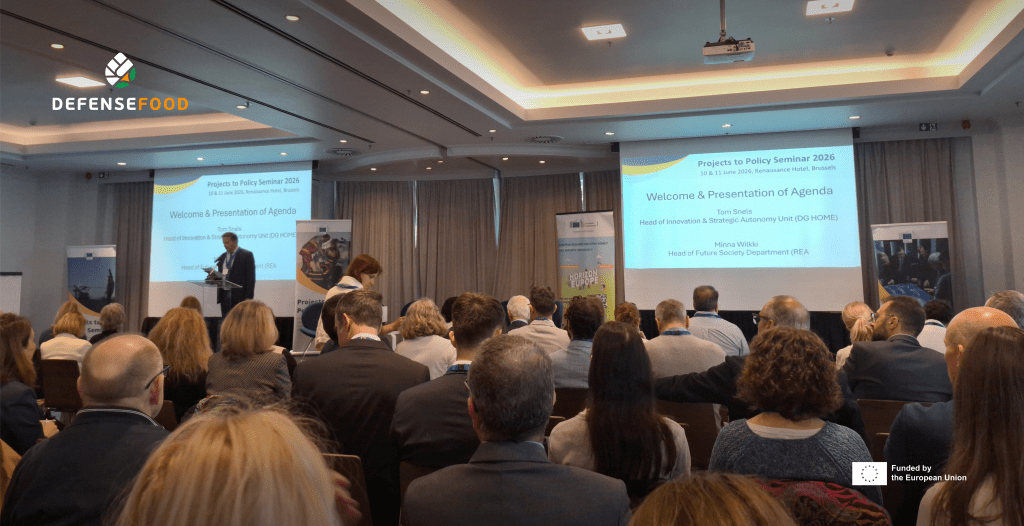
The DEFENSEFOOD project participated in the 2026 Projects to Policy Seminar (PPS), held in Brussels and co-organised by the European Commission’s Directorate-General for Migration and Home Affairs (DG HOME) and the European Research Executive Agency (REA).
The annual Projects to Policy Seminar is a key meeting point for newly launched Horizon Europe civil security research projects, European policymakers, EU agencies, practitioners, and operational stakeholders. Its purpose is twofold: to inform project representatives about current EU policy priorities and to increase policymakers’ awareness of new research activities, emerging solutions, and innovation pathways developed across the European security research landscape.
The 2026 edition brought together participants representing more than 36 Horizon Europe projects, six EU agencies, and seven European Commission Directorates-General. Over two days, participants took part in plenary sessions, policy exchanges, thematic breakout discussions, and networking activities designed to strengthen the bridge between research, policy, and operational implementation.
Connecting food system resilience with EU civil security priorities
DEFENSEFOOD was part of the seminar as a Horizon Europe project funded under the Disaster Resilient Societies area of Cluster 3. The project addresses a critical dimension of European resilience: the protection of food supply chains against chemical, biological, and radiological (CBR) threats.
Food systems are essential infrastructures for public health, economic stability, and societal security. Disruptions caused by contamination, intentional attacks, emerging hazards, or cascading supply chain shocks can have consequences that extend far beyond the food sector. For this reason, DEFENSEFOOD’s work is closely connected to wider European priorities on crisis preparedness, disaster resilience, public safety, and cross-border cooperation.
Through its research and innovation activities, DEFENSEFOOD aims to strengthen Europe’s ability to anticipate, detect, respond to, and recover from CBR-related threats affecting the food chain.
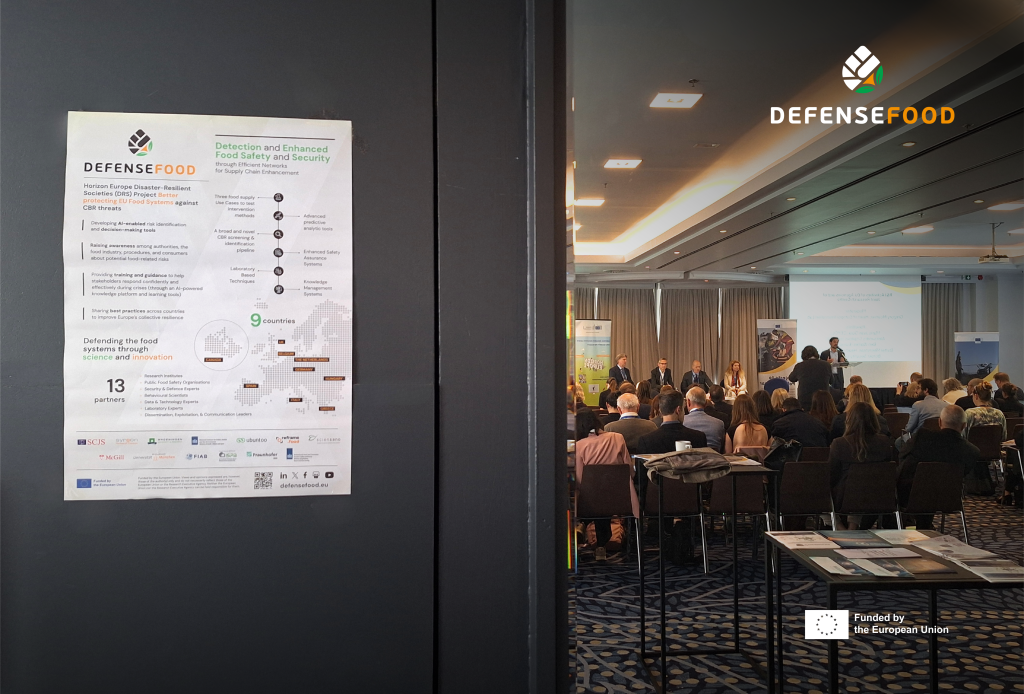
DEFENSEFOOD in the Disaster Resilient Societies discussions
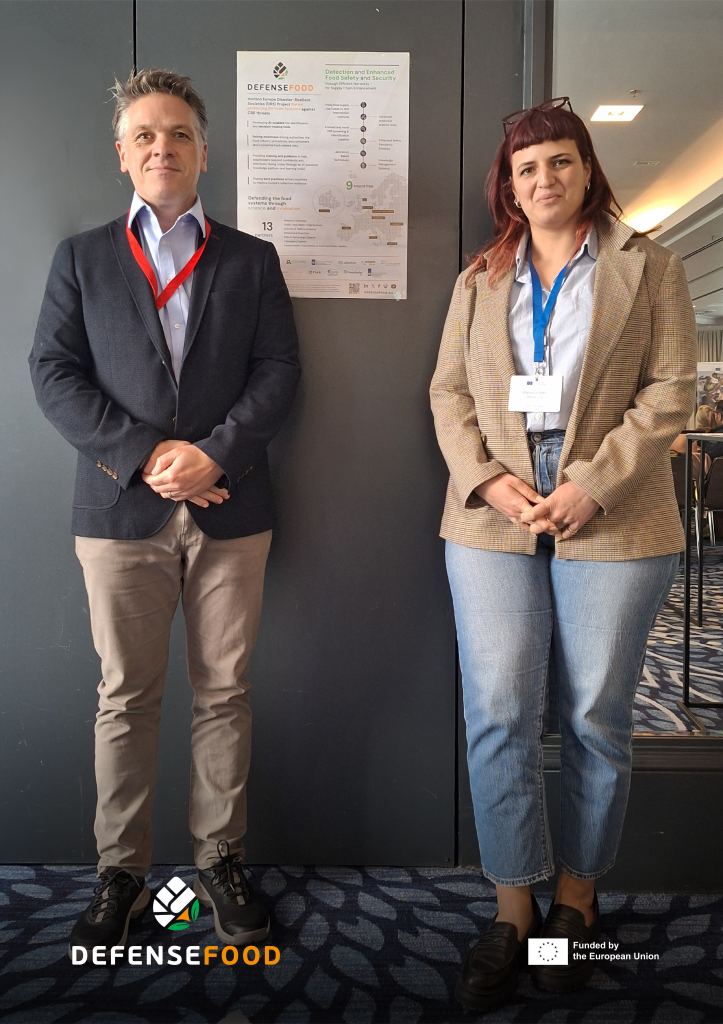
On the first day of the seminar, the programme included thematic breakout sessions organised around four areas: Fighting Crime and Terrorism, Resilient Infrastructure, Disaster Resilient Societies, and Border Management.
DEFENSEFOOD joined the Disaster Resilient Societies breakout session, alongside DARE, ARTEMis, GUARDIANS, HARMONI, HARMONY, REACTION, TOGETHER, TREESURE, PALAESTRA, and ACTIVE PCP.
For DEFENSEFOOD, which is still in its early implementation phase, the first breakout session was a useful opportunity to better understand the Disaster-Resilient Societies project landscape. It allowed us to meet other DRS projects, hear more about their objectives and progress, and understand where more mature projects already stand in terms of implementation, stakeholder engagement and expected outcomes. The discussion was also useful for identifying common challenges, needs and barriers that may arise across projects, as well as potential areas for future exchange and synergies.
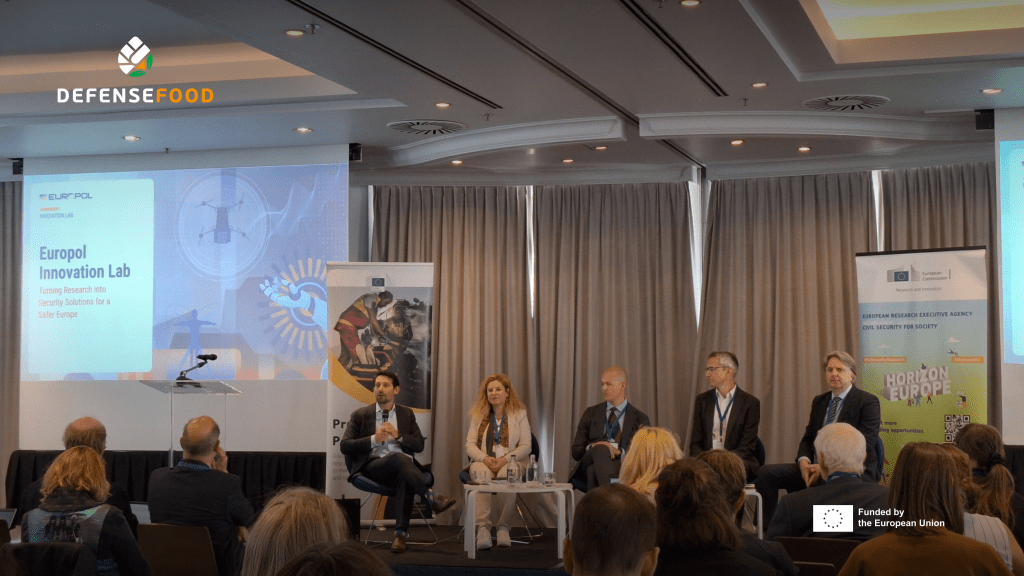
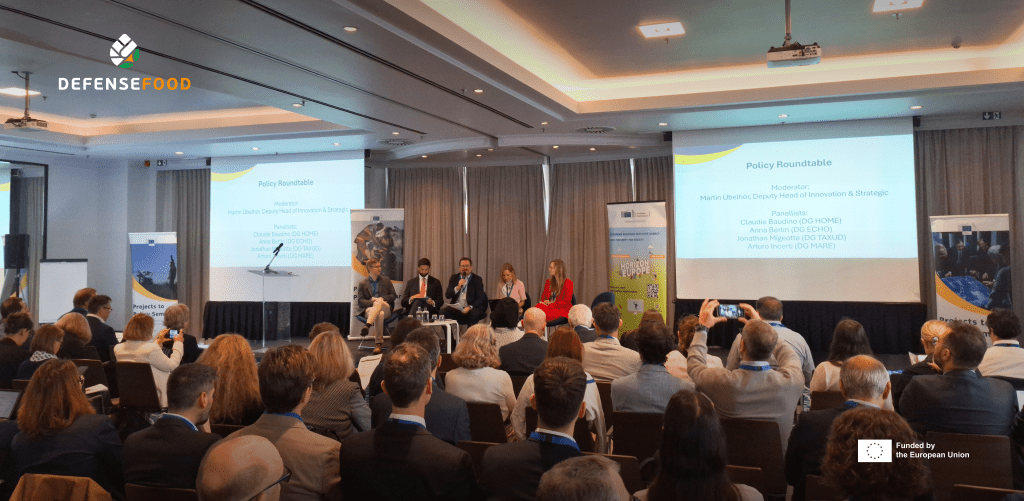
Cross-thematic exchanges with civil security projects
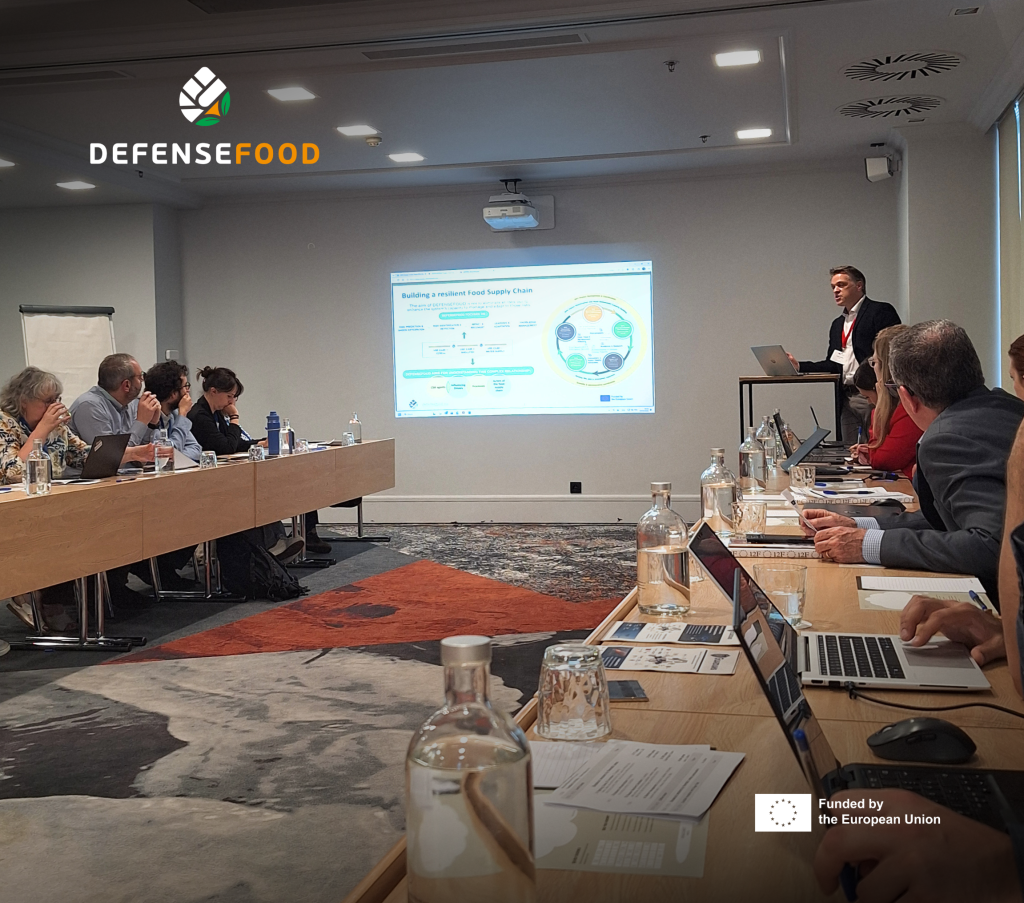
On the second day, the seminar moved beyond thematic clusters and introduced cross-thematic breakout sessions. These mixed groups were designed to encourage dialogue between projects working in different areas of civil security, creating opportunities to identify common challenges, shared policy needs, and potential synergies.
DEFENSEFOOD participated in a second breakout session alongside CustomAI, MARCONNECT, GUARDIANS, BTL-COP, CapCell, CRYPTOACTION, RESCUE, and PALAESTRA.
The session placed DEFENSEFOOD in a mixed group with projects from different areas of the civil security research landscape, including CustomAI, MARCONNECT, GUARDIANS, BTL-COP, CapCell, CRYPTOACTION, RESCUE and PALAESTRA. This made the discussion particularly useful from a cross-cutting perspective, as it moved beyond the specific thematic focus of each project and opened space to reflect on common challenges across different security domains. For DEFENSEFOOD, this was valuable for hearing how other projects approach practitioner and end-user engagement, exploitation, sustainability, policy relevance and future uptake of results.
Strengthening links between research, policy, and practice
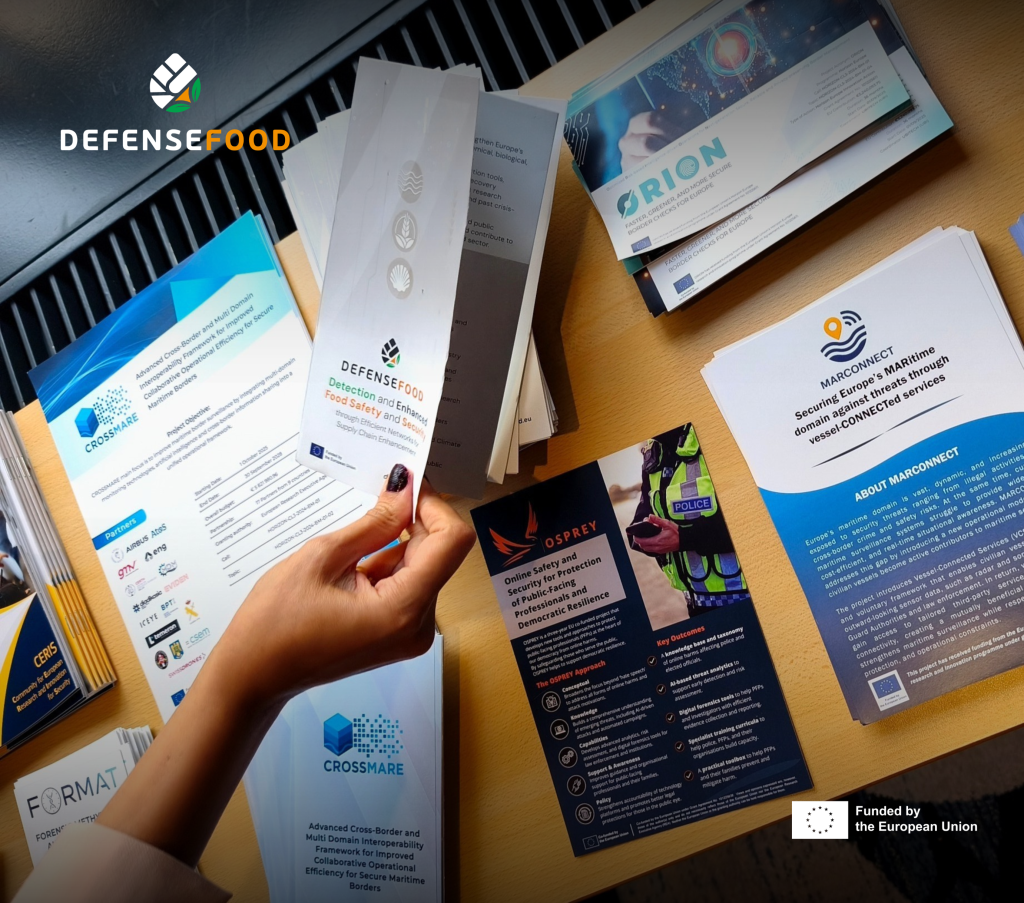
Participation in the 2026 Projects to Policy Seminar marks an important step in DEFENSEFOOD’s engagement with the wider European civil security research community.
By joining both thematic and cross-thematic discussions, DEFENSEFOOD contributed to exchanges on how Horizon Europe research can support policy development, operational preparedness, and the uptake of innovative solutions. The seminar also enabled the project to identify potential connections with other initiatives working on resilience, security, crisis management, infrastructure protection, border management, and the fight against crime and terrorism.
These interactions are essential for a project such as DEFENSEFOOD, whose objectives depend on cooperation across sectors, disciplines, countries, and stakeholder groups. Protecting Europe’s food supply chains against CBR threats requires more than scientific excellence alone. It requires shared understanding, coordinated preparedness, reliable communication, practical tools, and policy pathways that can support action before, during, and after a crisis.
Looking ahead
The Projects to Policy Seminar demonstrated once again the value of sustained dialogue between research projects and European policymakers. For DEFENSEFOOD, the event provided a timely platform to connect its food defence mission with broader EU security and resilience priorities.